Who Speaks for Britain’s Muslims?
Is the current political climate about the failure of Muslim representation—or the impossibility of it given the state of UK politics?
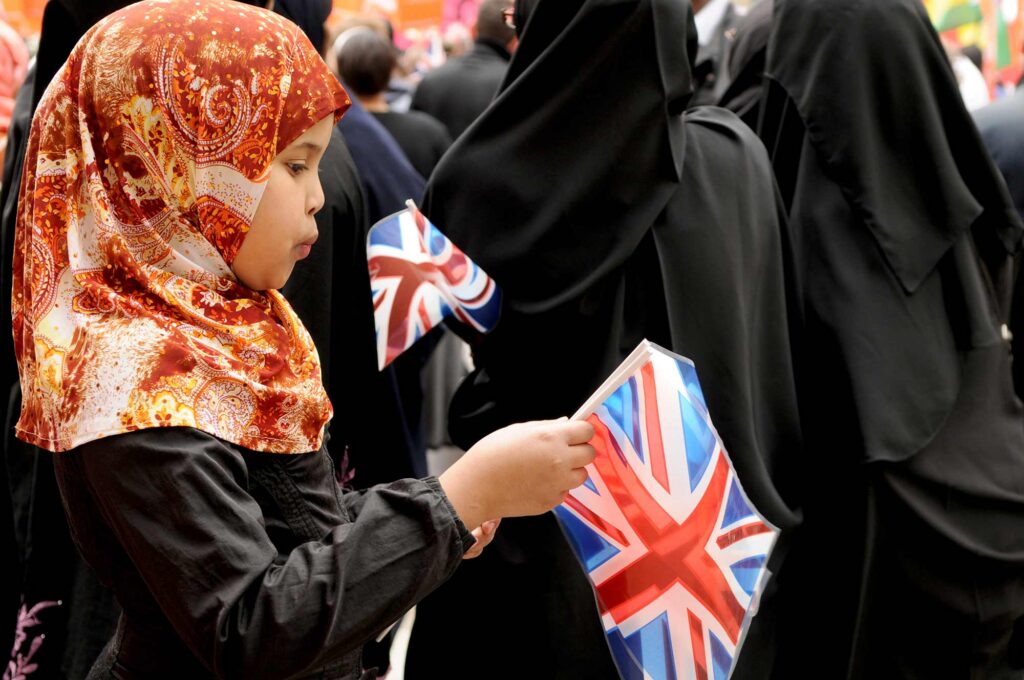
(Image source: Muslim Council of Britain)
On a cold, breezy February night in Manchester, Hannah Spencer, a plumber-turned-politician, did something no Green Party candidate had ever done.
As intermittent rain fell, the results came in and she’d won a Westminster by-election, giving her a seat in Parliament before the next United Kingdom general election in 2029.
Spencer not only defeated her rivals; she also increased the Green Party’s share of the vote by nearly 30 percent from two years prior. In doing so, she secured the progressive party’s first ever by-election victory in what was a Labour Party stronghold.
In the days after, rival campaigns and commentators rushed to explain how Spencer, who is not Muslim, won in a constituency with a significant Muslim population. Some pointed to grassroots organizing around Gaza and disillusionment with Keir Starmer’s increasingly centrist Labour Party. Others suggested a broader realignment on the political left and a fracturing of the country’s “Muslim vote.”
Then there was the defeated Reform UK candidate, Matthew Goodwin, who polled second. Losing by nearly 12 percentage points, Goodwin told reporters the result showed “a coalition of Islamists and woke progressives” had “dominated” a constituency that some predicted might even swing so far as to support his right-wing populist party. Others suggested Muslim voters had been instructed how to vote or even engaged in fraud, as if the thousands of ballots cast across southeast Manchester were evidence of coordination and corruption rather than people’s political will.
To those who spent weeks canvassing for Spencer, the accusations sounded less like analysis than Islamophobic sour grapes. They had done what political activists everywhere do. They organized, argued, persuaded and, ultimately, showed up to vote for the candidate they felt spoke best to their needs.
But beyond Manchester, the by-election, its results, and the dispute that followed captured a broader, persistent tension in British politics. For decades, Britain’s Muslims have been active participants in the country’s political life—as candidates, campaigners, donors, and voters capable of swinging close contests. At the same time, and at least since the 1990s, successive governments have struggled, or flat-out declined, to engage Muslims’ political demands on their own terms, showing reluctance to address issues such as Islamophobia, foreign policy concerns, or the recognition of representative bodies like the Muslim Council of Britain (MCB).
Now, as Britain’s Muslims are more politically engaged, and fragmented, than ever ahead of another cycle of elections, a long-running, nagging question remains. The issue is not simply who speaks for Britain’s Muslims, but whether the country’s political system is prepared to listen—and whether meaningful representation is even possible in the UK’s current political climate.
Who Do I Call If I Want to Speak to Muslims?
To help understand what the present means for Muslim voters in the UK—and what the future may yet hold—it helps to rewind to over three decades ago. In 1994, the UK’s then Home Secretary, Conservative MP Michael Howard, was facing a convergence of crises, from the controversy around Salman Rushdie’s Satanic Verses to the Bosnian genocide. Amidst the flurry, Howard saw a need for a representative body that could speak for Muslims across the country, “should they wish to exercise more influence over government,” he said.
When Howard made his remarks, there was no national body that could plausibly represent Britain’s Muslims to an increasingly centralized state. Nor was there a single Muslim Member of Parliament. Despite groundwork laid by groups such as the UK Action Committee on Islamic Affairs, Muslim political representation remained piecemeal. Howard, echoing Henry Kissinger’s famous question—“Who do I call if I want to speak to Europe?”—wanted a single organization he could summon when the government needed “the Muslim view.”
That call helped give rise to the MCB, the Muslim Council of Britain. Formed in 1997, the council brought together hundreds of mosques, schools, professional networks, and advocacy groups. In a country where most mosques are organized along ethnic or regional lines, the MCB had the strongest links to represent Britain’s Muslims. It never claimed to speak for all Muslims, but it aspired to be a representative interlocutor, in many ways aiming to fit the role Howard imagined.
Yet despite decades of effort, the MCB never secured a stable relationship with the government. When Zara Mohammed stepped down as its secretary-general in January 2025, she told the BBC the organization was effectively out in the cold. The result, she said, was “terrible,” reinforcing the sense among many British Muslims that the government did not take their concerns seriously.
 For some observers, the MCB’s marginalization reflects not the shortcomings of a single organization, but a deeper structural problem. The British state, sources told me, has struggled to engage Muslim communities on their own terms, particularly when Muslim perspectives conflict with foreign policy priorities around the War on Terror and events in Palestine. The issue, they argue, is less about representation than about managing Britain’s Muslims.
Successive governments, Muslim community leaders say, have applied implicit purity tests to Muslim organizations, rewarding those seen as compliant and sidelining those that challenge core national narratives. For example, under the government’s “Prevent” scheme, a counter-terrorism program focused on intervention to preempt individuals from becoming “radicalized,” Muslim charities and NGOs working on humanitarian issues—particularly in Syria and Palestine in recent years—have faced disproportionate investigative pressure compared to other, non-Muslim groups. Such approaches have produced cycles of engagement and disengagement, with funding provided to groups considered in line with government priorities while others are frozen out entirely. At each turn, the onus is placed on Muslim leadership rather than state policy.
The MCB’s experience over the last 30 years can be considered a case in point. Relations with the government were relatively positive in the organization’s early years, but they deteriorated sharply after 9/11. In 2001, polls showed roughly 80 percent of British Muslims opposed military action in Afghanistan, citing concerns about civilian harm, instability, and the lack of diplomatic alternatives. As rhetoric around the War on Terror intensified, Muslims increasingly found their political loyalty questioned, and Islamophobia surged.
The break became explicit in 2009, when Gordon Brown’s Labour government severed ties with the MCB after one of its deputy leaders, Daud Abdullah, signed a declaration suggesting reprisals against the Royal Navy if it attempted to intercept arms bound for Hamas, a proscribed group. The MCB dismissed Abdullah and condemned calls for violence, but formal relations with the government never recovered. Under subsequent Conservative-led governments, accusations of extremism hardened into policy.
In 2018, then home secretary Sajid Javid said the government would not engage with the MCB because “too many” of its members had expressed favorable views toward extremists—a claim the organization categorically denied and for which little to no evidence was produced. The nadir came in 2024, when it emerged that Michael Gove, then Secretary of State for Levelling Up, Housing and Communities, had considered designating the MCB an extremist organization. For many British Muslims, the episode confirmed a suspicion they’d long held: engagement with government was conditional, reversible, seeded with distrust and thus, ultimately unreliable.
Baroness Sayeeda Warsi, the former Conservative Party co-chair and the first Muslim woman to serve in cabinet, described this dynamic bluntly in her 2017 book The Enemy Within. Drawing on her experience inside government, she argued that Muslims had been “exceptionalised”—judged by higher standards and treated as a suspect community in service of national security and foreign policy goals. Initiatives such as Prevent, she wrote, institutionalized suspicion and positioned Muslims as a problem to be managed rather than citizens to be represented.
In a 2023 lecture at the University of Leeds, Warsi summarized the effect this way: “One set of rules for everyone else, but a different set of rules for British Muslims.” Under such conditions, she argued, no representative organization could flourish. And among Conservatives, anti-Muslim prejudice had “poisoned” the party.
When Labour returned to power in 2024 with a commanding parliamentary majority, some MCB leaders hoped relations might improve. Labour had formally distanced itself from the organization more than a decade earlier, but the election results suggested a party newly vulnerable in Muslim-heavy constituencies. Independent candidates, campaigning on issues ranging from Gaza to local service provision, defeated Labour in places such as Leicester South, Blackburn, and Birmingham Perry Barr. Analysis by the think tank Hyphen suggested that as many as half of Muslim voters who previously supported Labour either backed other candidates or abstained from voting altogether.
Yet those losses, no matter how shocking or surprising, did not prompt a reset within Labour—or government as a whole. Even when Prime Minister Keir Starmer’s government was praised for its swift response to racist riots that broke out across the UK last summer, MCB’s new secretary-general, Wajid Akhter, commented in July 2025 that there remained no formal engagement with the government, which had “very clearly” stated it did not wish to communicate with the largest and most diverse Muslim umbrella body. To that point, a Labour MP for east London, Stephen Timms, was even admonished for attending an annual MCB leadership dinner in January 2026.
After Starmer’s government pledged to conditionally recognize a Palestinian state in September 2025, the disconnect persisted still. In a statement, the MCB welcomed the move as “long overdue,” but criticized it as symbolic, noting the absence of measures such as a trade embargo or suspension of military support. For many Muslims, the announcement underscored how far government rhetoric remained from their priorities.
Whereas other religious communities—Hindus, Jews, evangelical Christians, Sikhs—have been able to voice their opinions and carve out support within the government with a more diverse approach to political representation, Muslim constituencies felt they were destined to remain politically marginalized, institutionally sidelined and structurally constrained – despite having tried to create the very organization the government once demanded.
Top-Down Versus Tapestry-Up
Today, the issue is no longer the absence of Muslim voices. It is that those voices increasingly speak outside the channels the government once tried to create and manage.
Against this backdrop, new initiatives have emerged. The British Muslim Network (BMN), launched in 2024 and now represented on the government’s contentious Islamophobia working group, has positioned itself as a fresh interlocutor. Yet many of the same tensions remain. Engagement without influence, critics warn, risks reproducing the very dynamics that sidelined the MCB.
Speaking from his home in Solihull, situated between Birmingham and Coventry in the West Midlands, Jehangir Malik, a longtime nonprofit leader, admitted that it is nearly impossible for any organization, even the newly founded British Muslim Network, to speak for Britain’s Muslims. If that were true in 1994, it is even more true now, he said.
Malik argues that the deeper problem is structural. Britain’s Muslim population has grown from roughly 1.5 million in 2000 to around 4 million according to 2021 census data (representing six percent of the UK’s population), becoming more ethnically, generationally, and politically diverse. Whereas South Asian heritage once dominated Muslim institutions, communities with Yemeni, Somali, Bosnian, Kurdish, Syrian, and Afghan roots now play prominent roles. “It’s a tapestry,” Malik said—not something that can be governed from the top down.
If he were designing a national body today, Malik said, it would look very different than what came before. “A regional, democratic structure feeding into a national framework,” he said. “The top-down model hasn’t worked. Won’t work going forward.”
It is perhaps from the ground up, other sources affirmed, that Muslims might be able to find their political voice in the future. Pointing to the Government’s devolution plan, which aims to shift power from London to local leaders and empower metro mayors to control economic growth, housing, and transport, Malik said that if the vote is fragmenting and UK decision making is shifting to local and regional authorities, then that is where Muslim politics can make the most impact, with or without national, representative bodies.
Malik’s wife, Shahin Ashraf, who served as Solihull’s first Muslim mayor from 2024-2025, learned that firsthand. “Leadership is a funny thing,” the Green Party politician said. “Above all, I think I learned two things: First, if you cannot find one way, find another way. And second, to create democratic conversations, everyone needs to be involved at the table—then you can co-create solutions.”
Ashraf’s trailblazing leadership was already high-profile enough; she faced intense pressure linked to racially charged scrutiny. Then, amidst nationwide riots stemming from false claims about a stabbing attack in Southport, UK in summer 2024, the far-right marched through Solihull, past Ashraf’s office and a local mosque.
It was terrifying and heartbreaking, Ashraf said, to see the narrative of misinformation translated back into communities like hers. While she felt the national government lacked a workable plan of action — in part because of its historic lack of engagement with Muslim groups — Ashraf saw community leaders come out to diffuse the tension. “Ultimately, when you have local decision making you get the best results, because it is from the community, for the community,” she said.
The Prime Minister also visited during the riots, and Ashraf had the opportunity to address him directly. Calling his attention to the need for the government to name and define Islamophobia for what it is, she also encouraged him to reconnect with Muslims, because otherwise, they were going to slip away. “I told him, if you don’t listen, it’s silencing a massive swathe of the UK,” she said. “It’s a question about democracy, not ‘Muslim’ politics.”
For now, the results of local elections suggest that Muslim voters are continuing to abandon Labour. In May 2025, for example, of the fourteen seats where the Muslim constituency is 30 percent or more, eight went for independent candidates. Only two went for Labour. The others were flipped in favor of Tory, Green, and Reform Party candidates.
Abdallah Adnan, a born-and-bred Brummie (someone from Birmingham) in his late thirties, said he expects this trend to continue. A lawyer working with the organization Muslim Engagement and Development (MEND), Adnan said that since October 2023, Muslims across the country have been galvanized.
“It’s shown a really clear light on a lot of things,” he said. “Gaza gave people new eyes to see the world with. It became the benchmark.” Though historically Muslims found their political home with Labour, the political space has now opened up so that Adnan sees the constituency—especially young Muslims—claiming its own space in the UK’s political scene. As part of the Muslim Vote movement, he and others worked hard to promote, and begin to build out, this independent space. “The world is a different place now,” said Adnan. “Third and fourth generation British Muslims don’t know any other home spare for certain areas of Brum or Leicester, so they are confident to speak their voice and their identity and stake their position in the UK.”
Whether any national body can harness that energy remains uncertain. What seems clearer is that Muslim voters are no longer waiting to be spoken for.
Trust and Proximity
Looking ahead to Scottish and local elections to come in 2026—and the emergence of former Labor leader Jeremy Corbyn’s and former Labor MP Zarah Sultana’s new Your Party—Adnan said it will be telling to see how the government’s efforts to “work” the Muslim vote play out. He suggested these efforts are largely shaped by the government’s preferred foreign policy, often at the expense of felt needs and local concerns. He expects to see voters, especially younger ones, line up behind Your Party and more independent politicians who are challenging the traditional parties’ approach to Muslim communities, such as with Spencer in Manchester.
Whether or not the MCB or groups like the BMN will have a role to play, Adnan is uncertain. Though encouraged by the changes MCB is making under their new secretary general, with more emphasis on local groups and regional chapters, he said Muslims are not yet at the point where they have enough money or influence nationally to have a meaningful spot at the table. Instead, Adnan said, “we have people and people power is nothing to be scoffed at. Power comes from the grassroots.” And grassroots Muslim voices like his are tired of being effectively managed from above, no matter who is doing the managing.
That shift is already visible on the ground in places like Adnan’s home city. In South Birmingham’s King’s Heath neighborhood, Imam Maseehullah Patel sees these national trends play out within his local community, with women who wear hijab—who are more readily tagged as Muslim—worried about going out in public areas, as well as families concerned about their future in the country. It’s not only the increased rhetoric and attacks—in its recent 2025 report, the independent organization Tell MAMA (Measuring Anti-Muslim Attacks) recorded a total of 6,313 cases of anti-Muslim hate—but the lack of political voice that angers Patel and those in his care. Originally from Dewsbury, the imam said, “the people in King’s Heath are well-educated, they can see the big picture. They are frustrated about the increased cost of living, social isolation, the far right and lack of quality social services.”
To that end, his mosque community has engaged with local councillors to address neighborhood necessities. During Covid shutdowns, they started a food bank that is now the main source of sustenance for numerous families in the area. “Eighty percent of those who come are not Muslim,” he said. “This isn’t about Islam or Muslims; this is about what our community needs.”
Nearby in Sparkbrook, the Muath Trust—a decades-old community anchor known popularly as the “Amanah Centre,” offering everything from youth sports programs and vocational training to legal aid and housing—works largely outside national political structures. “Governments change, but we keep doing our work,” said Ahmed Yafai, its head of operations. “We’ve been around for so long, everyone knows us and what we do,” said Ferdous Audhali, who directs their youth programming. “We are a community anchor.”
“In the end, we are here to respond to community needs and be a voice for them,” she said. “We don’t necessarily need the British government to respond if we can get local councillors to react from the ground up,” added Yafai.
Influence, they said, comes from trust and proximity, not recognition from Westminster.
As Britain enters a new electoral cycle, the failure to build a durable, trusting relationship with Muslim communities may carry real political costs. Demographic change and grassroots organizing are reshaping Muslim political life faster than the government appears able, or willing, to admit or adapt to.
If successive governments continue to treat Muslim representation as something to be managed rather than meaningfully engaged, they may find that no single organization speaks for Britain’s Muslims not because such a body cannot exist, but because the terms on offer no longer make sense.
In that case, the question facing British politics is not who speaks for Muslims—but how long it can afford not to listen.
Ken Chitwood is the author of Borícua Muslims: Everyday Cosmopolitanism Among Puerto Rican Converts to Islam. He is a postdoctoral researcher pursuing Habilitation with the Department for the Study of Religion at Universität Bayreuth, an Affiliate Researcher with the University of Southern California’s Center for Religion and Civic Culture, and a Visiting Scholar with the University of Edinburgh’s Alwaleed Centre for the Study of Islam in the Contemporary World.