The Religion behind Wellness Trends
An excerpt from “Beyond Wellness: How Restoring the Religious Roots of Spiritual Practices Can Heal Us”
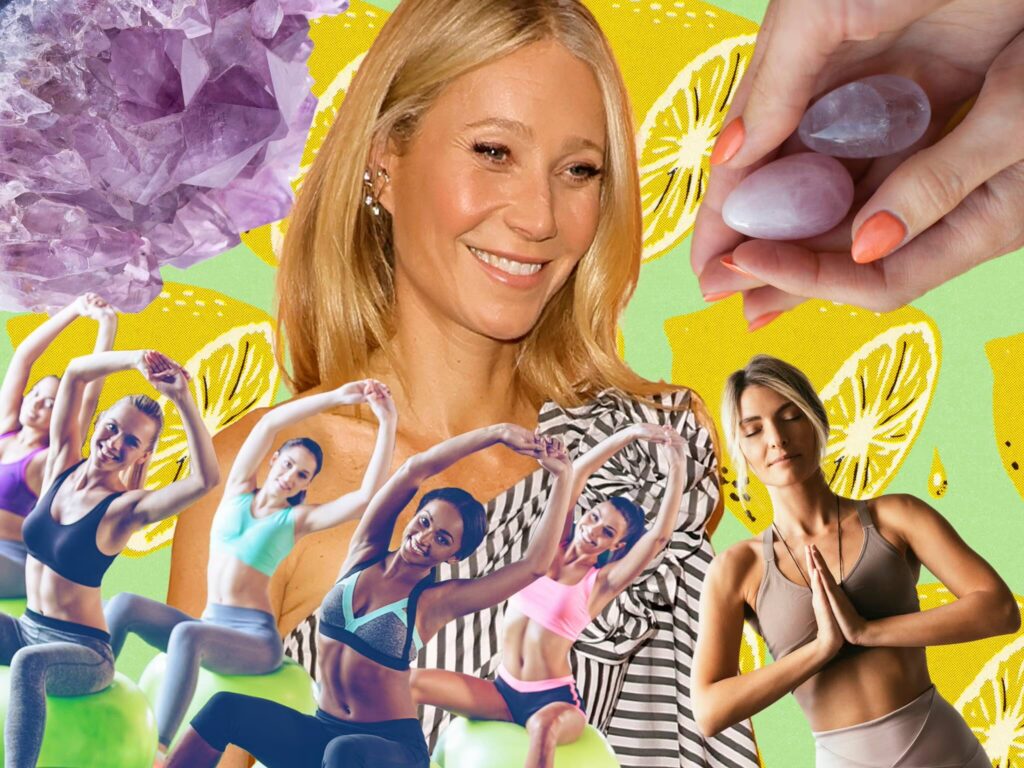
(Image source: iStock/Getty/The Independent)
The following excerpt comes from Liz Bucar’s Beyond Wellness: How Restoring the Religious Roots of Spiritual Practices Can Heal Us (with permission of Tarcher, an imprint of Penguin Publishing Group, a division of Penguin Random House LLC. Copyright © Liz Bucar, 2026).
The book explores the wellness industry, the promises its influencers make, and how taking the religious meaning behind many of these trends seriously might actually improve them.
***
Oprah’s daytime talk show that I watched as a teenager. The nineteenth-century transcendentalists I slogged through in graduate school. Pricey elixirs being marketed by Gwyneth Paltrow’s company Goop on my Instagram feed. All have tried to convince me spirituality can exist without religion. And for a while I was on board. I thought I could access the benefits of spirituality through products, celebrity examples, and life hacks without getting involved in the messiness of religion.
 But now I’m convinced these intellectuals and wellness influencers got it all wrong. Spiritual practices like yoga, mindfulness meditation, and plant psychedelics don’t come from nowhere. They are associated with actual religious histories, systems of values, and communities quite often built and shaped over thousands of years. They work not because they are vaguely ancient or magical or mystical but because they have tapped into tried-and-true bodies of wisdom found in religious traditions.
And that makes me wonder: If we ignore the religious context and content of our spiritual techniques, are they missing their special sauce? Could they be even more powerful if we added the religion back in? Is there a way to do so without joining a religious community or declaring a religious identity?
I don’t have a religious affiliation, but for twenty-five years, I have been a scholar, teacher, and student of religion….
Although my original intention was to study religion as a way to understand how it shapes our political and social institutions, something much more personal—and unexpected—has happened as well. It has helped me understand my own commitments to well-being, even offering ways to shape or enrich them.
So here is my challenge to you. Consider that your favorite spiritual self-care technique is probably a knockoff of a religious one. You gain from that extraction a sense of control, but something important is also lost—ethical frameworks, longterm commitments to a community, systemic understanding of suffering and sickness, insights into human nature, and more. By taking the religion behind that practice a bit more seriously, you might land on a version of a spiritual/religious mash-up that is better for your well-being and the well-being of others.
Not so fast, you might be thinking. I’m no fan of institutionalized religion. And I get it. Religion has a PR problem, and for good reason. Religious institutions have protected abusive clergy, instilled sexist and racist policies, supported narrow interpretations of sacred texts, condemned queerness, and exacerbated prejudice. They have been on the front lines of the most polarizing political battles of my lifetime, such as regulating sexuality, denying access to health care services, fighting over borders, and framing religious minorities as the dangerous “other.” For many people in the fast-growing religiously unaffiliated demographic known as the “nones”—and yes, I’m part of this group—the organized religion of our parents’ and grandparents’ generations seems too outdated, conservative, and restrictive to add meaning to our lives.
But we don’t have to reject all religious ideas and values just because religious institutions have done us and others wrong. Religious communities, scholars, and leaders have grappled with what a good human life looks like for a long, long time, and their insights can be useful even for those of us who aren’t comfortable with claiming a religious identity.
And the truth is that many of us who think we have given up on religion haven’t distanced ourselves as much as we might think. We exist in a muddy area between organized religion and secularism, unchurched but religiously curious. Instead of ordering a meal off the menu—instead of becoming, say, a Presbyterian, Reform Jew, or Zen Buddhist—we treat religious traditions as a spiritual salad bar, filling our plates with our favorite items in a constant search for the perfect combo.
But rather than making us better, I suspect popular spiritual practices are functioning like dopamine hits that prevent us from putting in the hard work necessary to live fully ethical, relational, and sustainable lives. A yoga retreat is a temporary Band-Aid on the stress of work deadlines, carpools, and family drama. The endorphins I get from spiritual fitness classes only last an hour. Detox diets are poisoning my relationship with food. I worry the spiritual practices I’m drawn to are extracted from religious minorities and thus out me as a Becky or maybe even a Karen. It’s not the picking and choosing from the spiritual salad bar that gives me pause—it’s the fact that we’ve stopped caring about what’s in each ingredient. In our search for the perfect mash-up of spiritual therapies, we’re adopting practices without understanding their religious associations.
I don’t want us to give up spiritual practices. I want them to work better.
Liz Bucar is a religious ethicist and professor of religion at Northeastern University, as well as a certified intenSati and Kripalu yoga instructor. Her writing has appeared in The Atlantic, Los Angeles Times, Teen Vogue, and The Wall Street Journal, and she is the author of four books, including the award-winning Stealing My Religion and Pious Fashion.